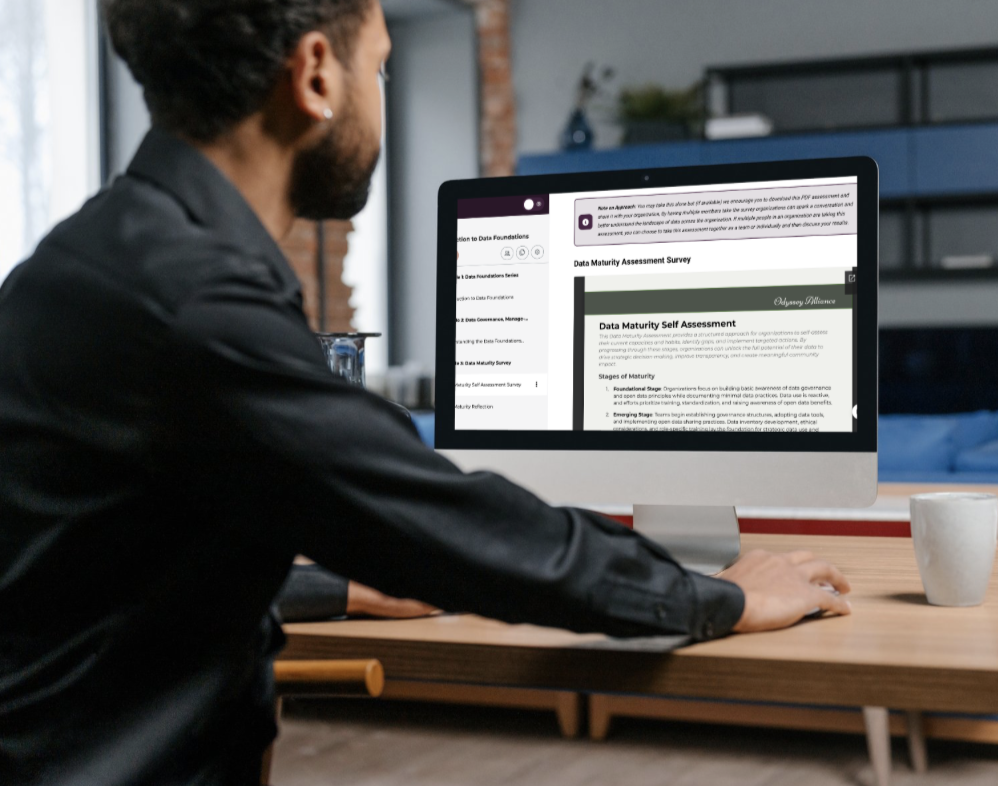
Data Fundamentals Series:
These courses were built in response to what we see across nonprofit, government, philanthropy, and public-sector organizations: data is increasingly central to funding, programs, and policy, yet teams are rarely supported to govern it ethically, manage it responsibly, or communicate it with care.
Culture of Care Series:
This series was built for leaders and staff that see opportunities in their organizational culture, who want greater trust, and more impactful teams. These courses are designed to build cultures that embed the Culture of Care framework into how organizations operate so staff have the clarity, support, and meaningful influence needed to contribute to shared goals.
All courses are available on our Work Well Learning Lab site on Talent Learning Management System. Courses are fully online and self-paced filled with videos, templates, workbooks, maturity models and assessments, and a final activity that allows you to apply all of your course learning in to sample strategies, frameworks, or policies back to your work place!
Courses are priced to be accessible for organizations to purchase multiple seats for their staff. OR for individuals to take these courses on their own.
OR
Contact us to learn how we can create individualized, custom made courses for your organization in the areas of:
STRATEGY | EVALUATION | DATA SKILLS | LEADERSHIP | CULTURE DESIGN
What We Offer
Data Fundamentals Courses
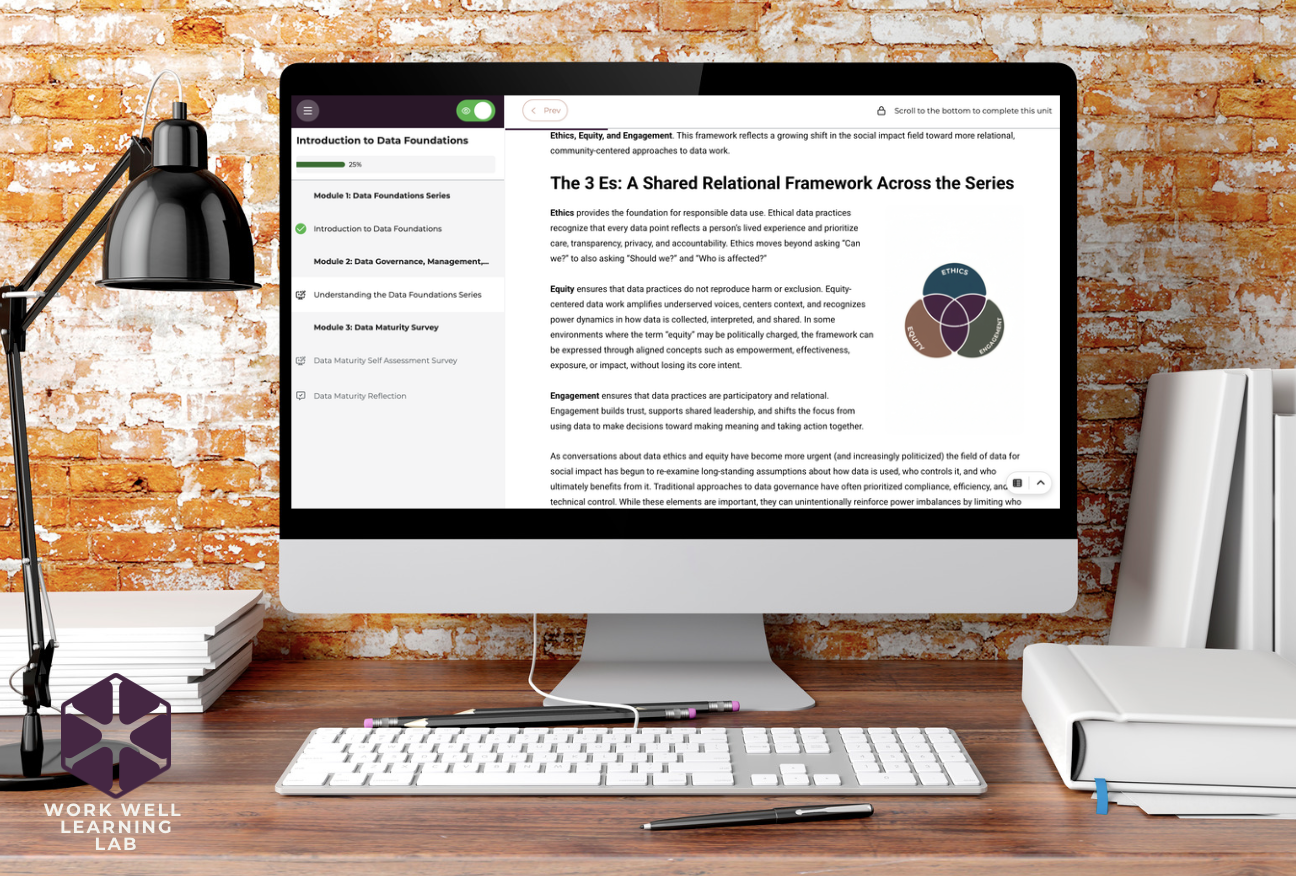
INTRODUCTION TO DATA FOUNDATIONS
In this FREE Introduction to Data Foundations course you will engage with the Data Maturity Assessment and Model. A structured approach to self-assess current capacities and habits, identify gaps, and implement targeted actions. By progressing through maturity stages, individuals and organizations can unlock the full potential of their data to drive strategic decision-making, improve transparency, and create meaningful community impact.
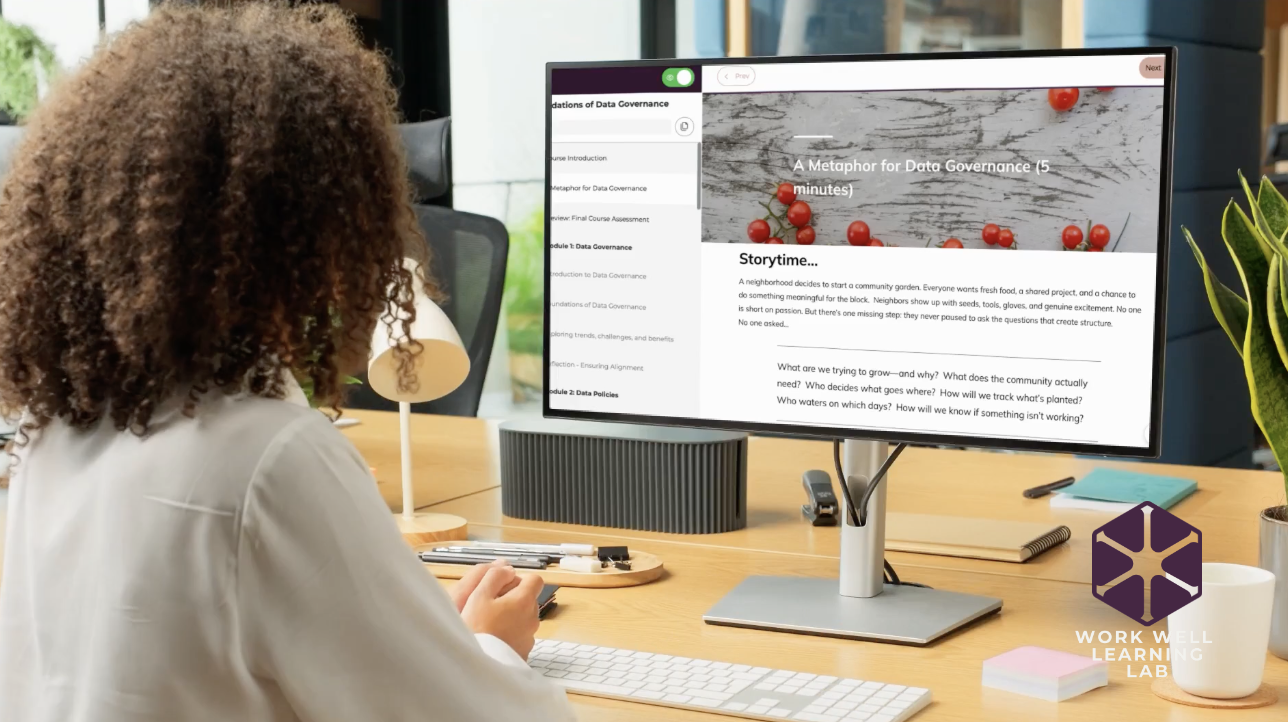
FOUNDATIONS OF DATA GOVERNANCE
Through a combination of practical instruction, real-world examples, and peer-to-peer learning, participants will learn how to build data policies, processes, roles, and systems. Emphasizing ethical, equitable, and engagement practices, the course guides learners through the five foundational pillars of nonprofit data governance - Policies, Practices, People, Platforms, and Products - culminating in a capstone activity where participants craft a Data Governance Charter Pitch for their organization.
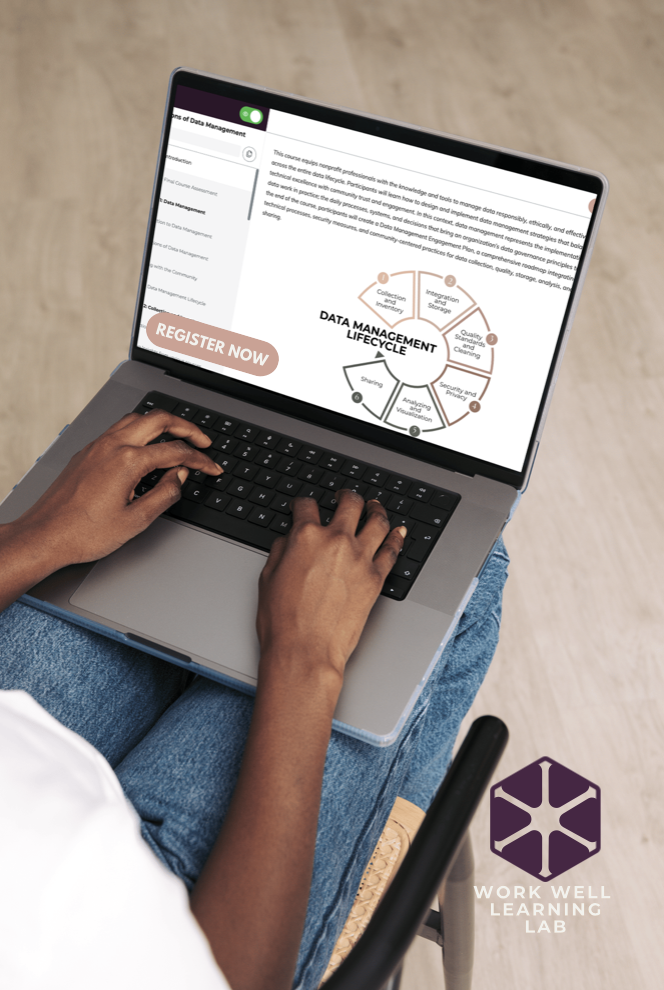
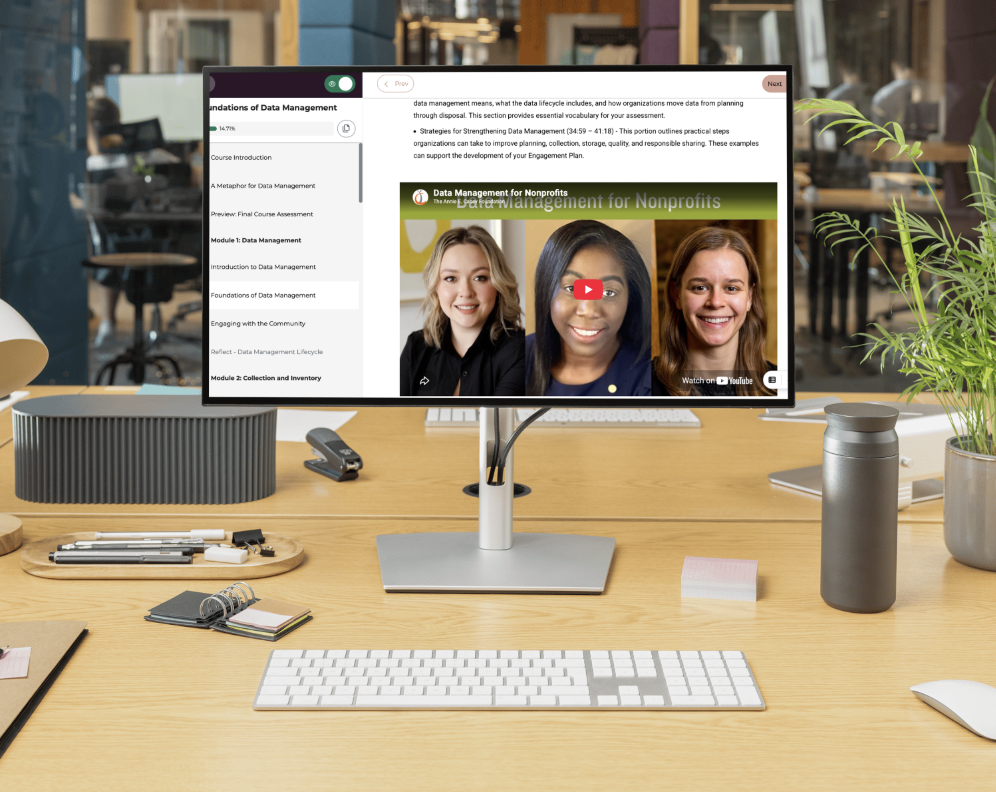
FOUNDATIONS OF DATA MANAGEMENT
Participants will learn how to design and implement data management strategies that balance technical excellence with community trust and engagement. Data management is the implementation of data work in practice; the daily processes, systems, and decisions that bring an organization’s data governance principles to life. By the end of the course, participants will create a Data Management Engagement Plan, a comprehensive roadmap integrating technical processes, and community-centered practices for data usage.
FOUNDATIONS OF DATA COMMUNICATION
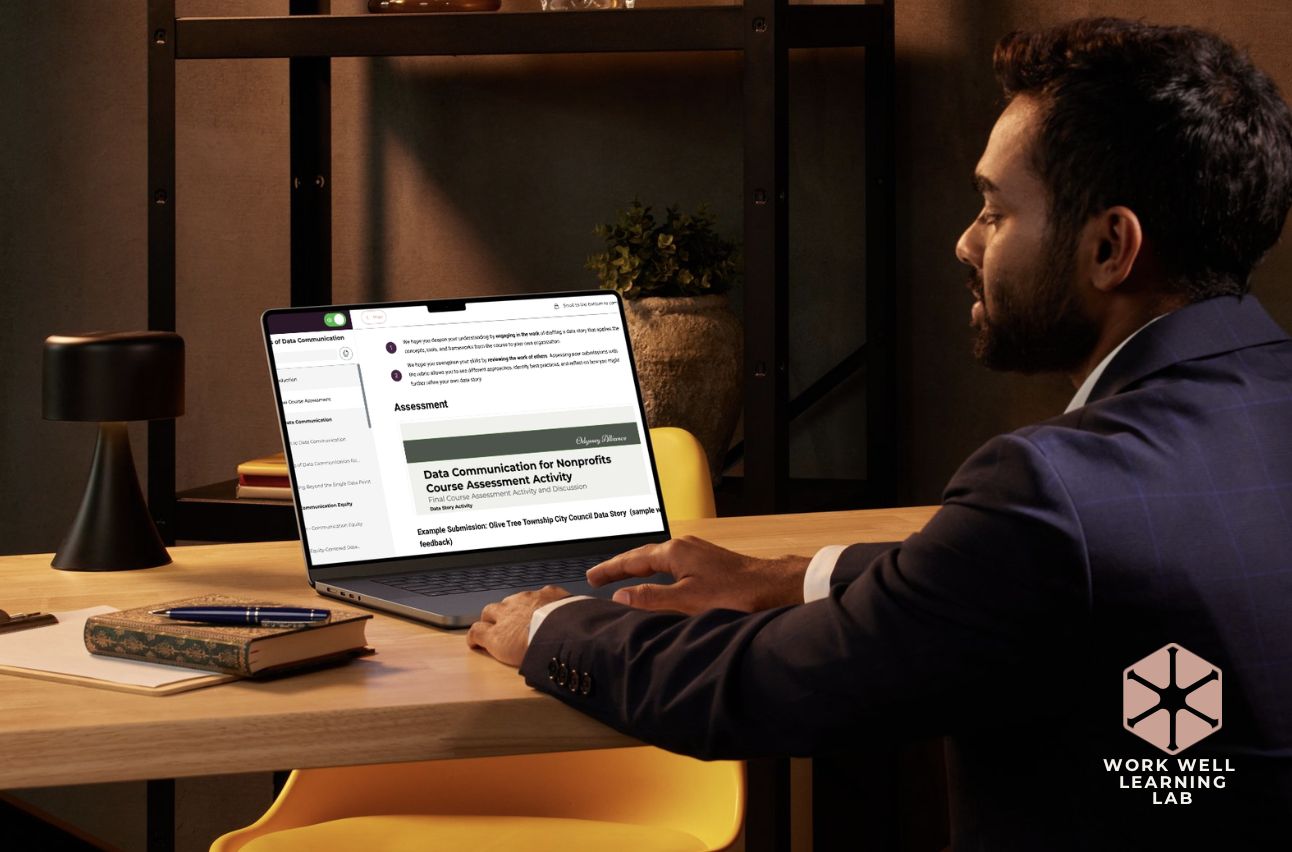
This course equips professionals with the skills to transform complex data into clear, equitable, and actionable stories that drive understanding and impact. Learn how to interpret data through a human-centered lens, acknowledging that every dataset holds multiple possible stories, and how to communicate findings in ways that honor community context, build trust, and support decision-making. Participants will explore how to communicate data responsibly by aligning messages with organizational values, and honoring the lived experiences behind the numbers.
Culture of Care Courses
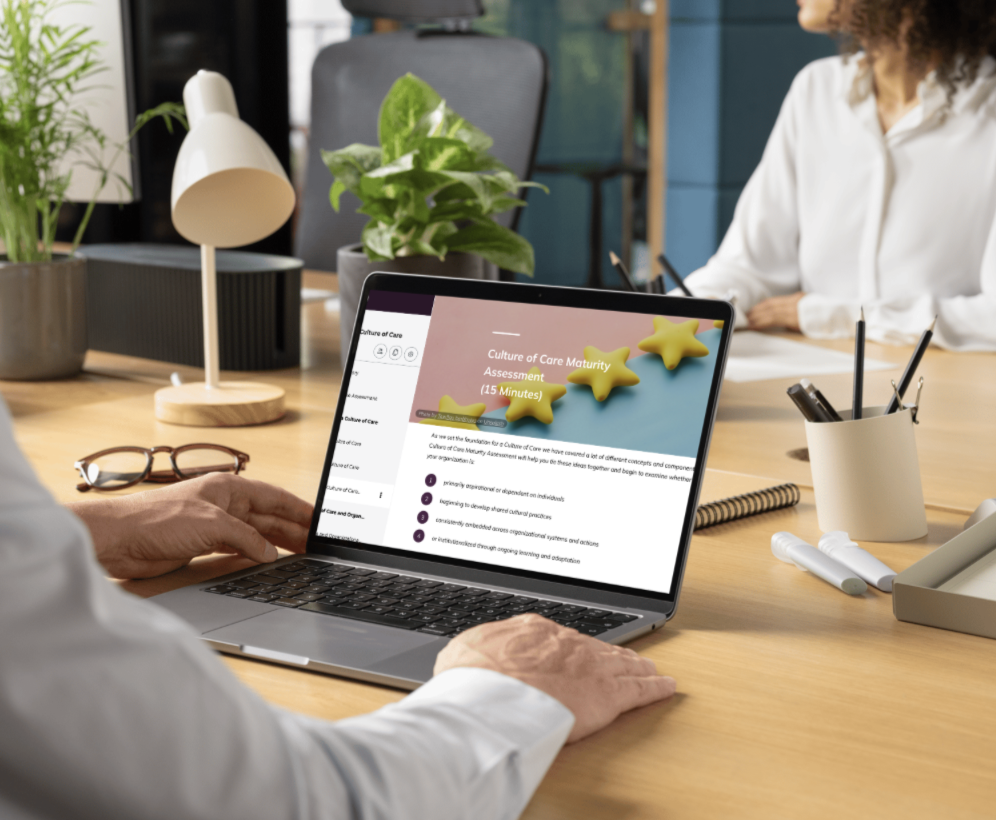
FOUNDATIONS OF A CULTURE OF CARE
This course introduces the foundations of a Culture of Care by exploring wellbeing and trust as organizational responsibilities rather than individual ones alone. Participants examine how organizational culture influences the health while learning practical approaches for building cultures where people and organizations can thrive together. Throughout the course, learners will work through a Culture of Care Maturity Assessment that evaluates the current conditions within their organization.
CULTURE OF CARE: RELATIONAL POWER AND CARE
Participants examine the relationship between personal agency, self-awareness, emotional intelligence, autonomy, and shared responsibility while learning how individual actions contribute to collective wellbeing. Throughout the course, learners will investigate how power operates within relationships and how practices such as communication, reflection, empathy, and shared ownership strengthen cultures of care. Participants will complete a relational power and care assessment that identifies opportunities to strengthen their own practices.
POWER AND CARE: STRUCTURAL AND ORGANIZATIONAL POWER AND CARE
Participants examine how organizational structures shape employee experiences, influence organizational culture, and either strengthen or undermine wellbeing. Learners investigate practical approaches for designing organizations where systems consistently reflect organizational values and support cultures of care. By the end of the course, participants will complete a Structural Power Assessment and Organizational Action Plan, identifying opportunities to strengthen the structures that sustain a Culture of Care.
CULTURE AND SOCIAL IMAPCT
Organizations do far more than deliver products and services, they shape how people experience the world, those around them, and themselves. In this course, participants explore organizations as social institutions and examine how workplace cultures of care can influence communities, public trust, economic opportunity, and social wellbeing for good. Participants will consider what it means to design organizations that contribute positively not only to employee experiences but also to society. By the end of this course participants will synthesize their learning from all four Culture of Care courses by developing a Culture and Social Impact strategy.
I took the Foundations of Data Governance course, it was awesome! Each section was thoughtfully constructed, and I love the way the coursework built on itself. My understanding of data practices was enhanced, and I was able to identify how I as a manager can help lead a more data-informed (yet still human-centered) organization.
-Manager, State Health Department
INTERESTED IN CUSTOM MADE COURSES
Work with us to create learning tailored to the needs, interested, and uniqueness of the landscape your organization works with.
CUSTOMIZED LEARNING CREATED FOR: